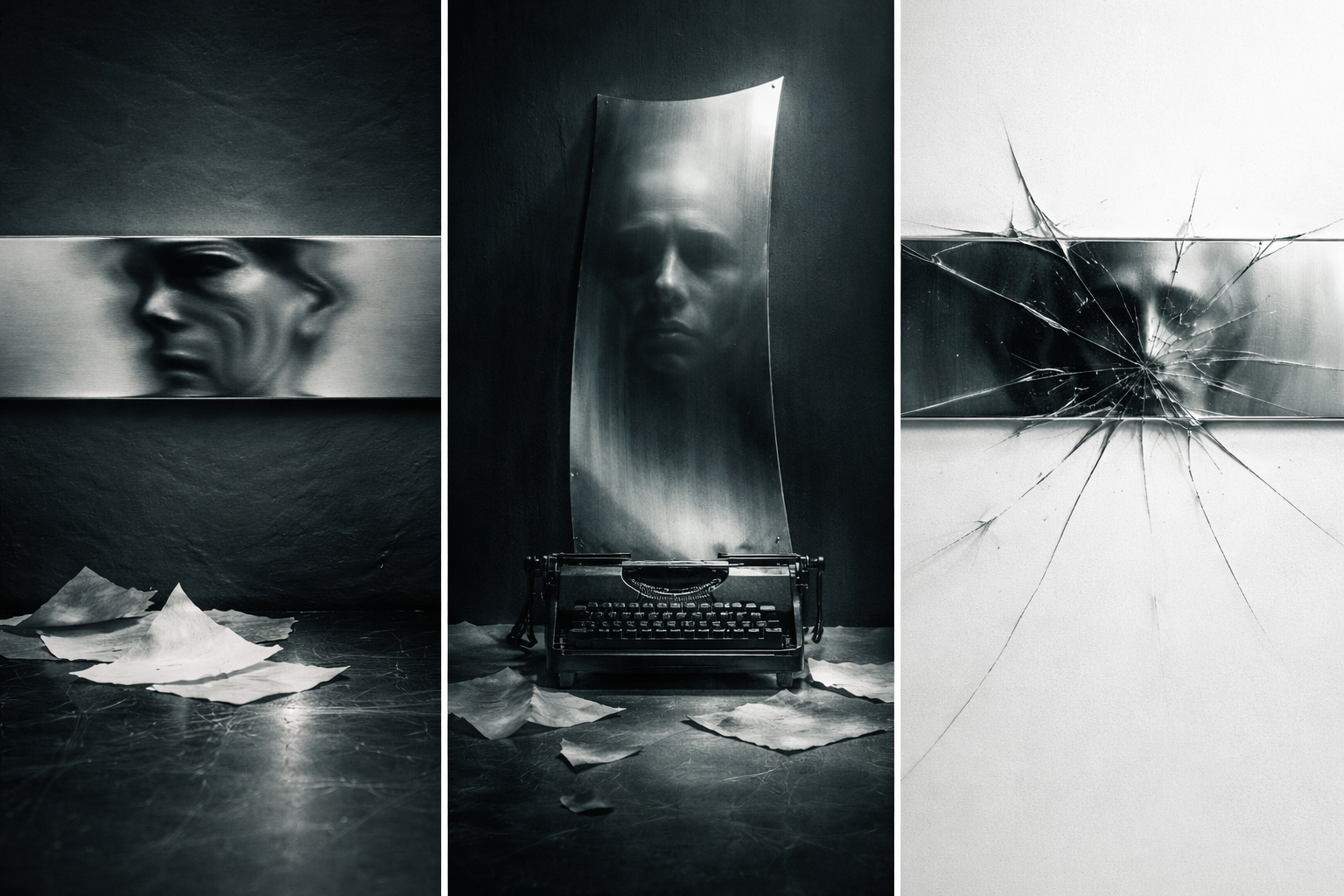
Slop Panic
“AI slop” has become the new garlic necklace — a charm people lift when a sentence lands too close to the bone. They don’t read it. They don’t examine it. They just brandish the word slop and hope it wards off whatever clarity just brushed their skin.
But the panic was never about machines. It’s a referendum on human mediocrity — a defense mechanism masquerading as critique.
Most who chant it aren’t protecting art. They’re protecting their ceilings. The accusation is a shield for people who’ve never built discipline, never sharpened a voice, never learned to hold a thought still without it collapsing into noise.
So they project. They call precision “generated.” They call incision “automated.” They call clarity “fake.” Not because it is — but because the alternative is admitting they couldn’t produce it if their life depended on it.
Slop cannot arrest a thread. Slop cannot force a reframe. Slop cannot tilt a conversation into stillness. Only clarity does that — and when it appears, the untrained insist it must be artificial. They cannot imagine that someone else simply learned to wield a tool with intention.
The hostility toward “AI writing” is not literary. It’s existential. It’s the fear that discipline — when paired with machinery — exposes a hierarchy they hoped was never real.
In a culture drowning in noise, the easiest way to bury clarity is to label it “generated” and pretend the label dissolves the truth it carried.
But the deeper panic is simpler:
The threat isn’t that AI might flood the world with garbage. The threat is that AI makes it obvious who already was.